Sinker Cypress; the accidental treasure
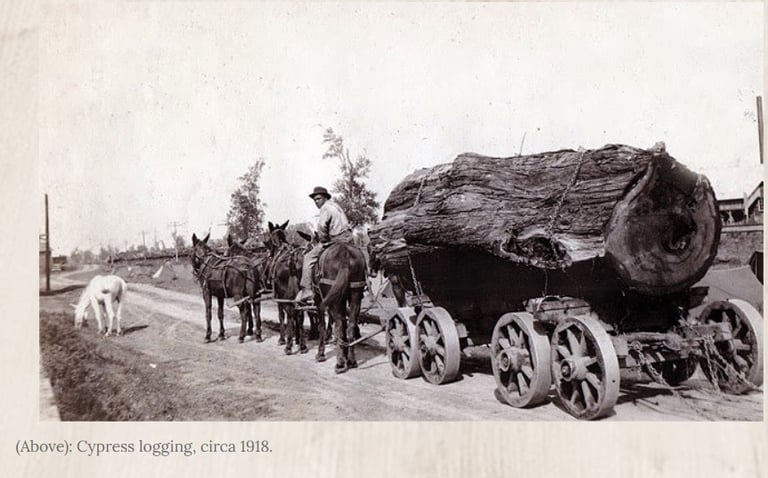
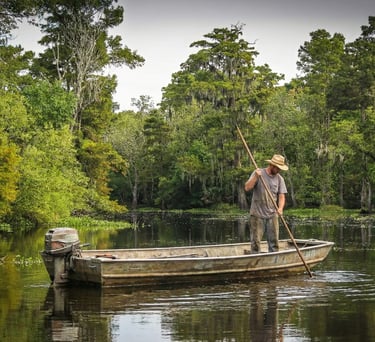
Located in the deep south of Louisiana, we are gifted with the best Cypress you can find anywhere. From over 150 years of logging, an unintended byproduct is Sinker Cypress. When Cypress trees were felled in the swamps and floated from one place to another, many of those naturally oil-soaked logs sank, and were irretrievable at the time. It's believed that as many as 20% of those logs were lost this way. Deemed abandoned property, they are hunted by modern day swamp loggers who haul them out of bayou beds and lake bottoms.
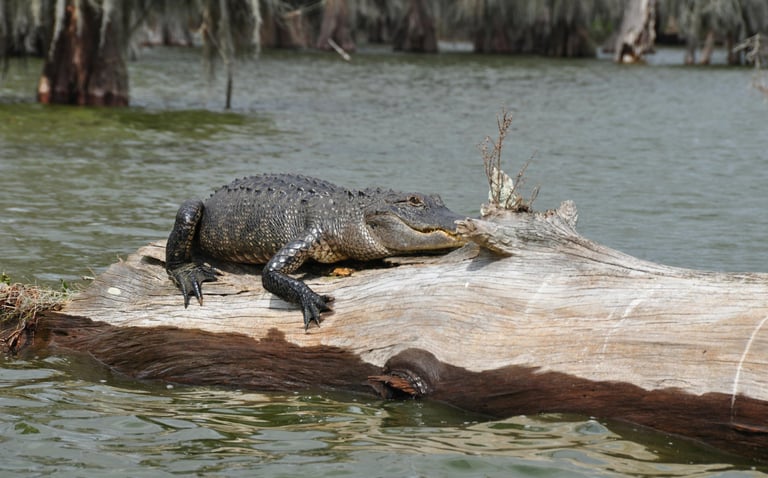
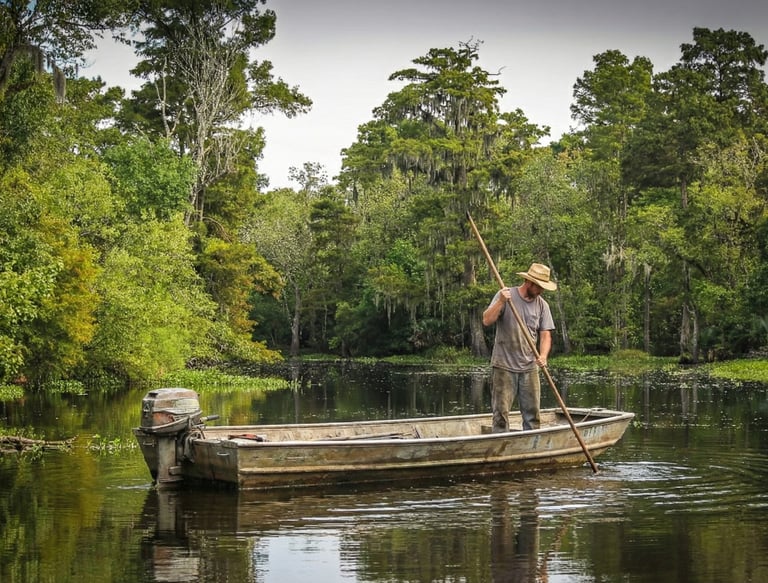
The swamps don't give up their treasures easily. Today it's quite an ordeal to just locate these sunken treasures. All of the easy to find logs were taken many years ago. After locating a log, one has to employ a variety of methods to bring them to the surface; not the least of which are raw strength, determination and courage in what can be a hazardous undertaking.
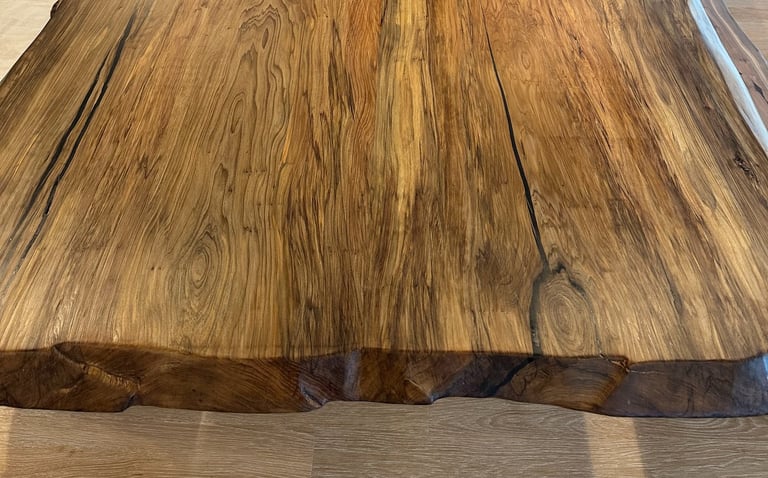
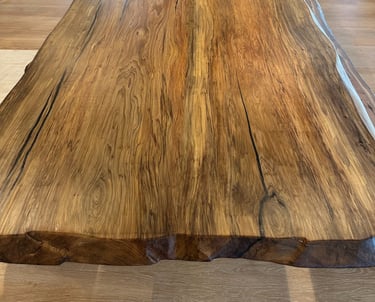
After hauling the old logs from the muddy waters, they are milled into slabs and then dried, both air and kiln, before cabinet and furniture makers create unique pieces for discerning customers.
Whenever possible, we encourage our clients to embrace the natural features of the wood. To actually showcase its one-of-a-kind quality as we bring out the very best characteristics that will be a talking point for everyone who enjoys its natural beauty.
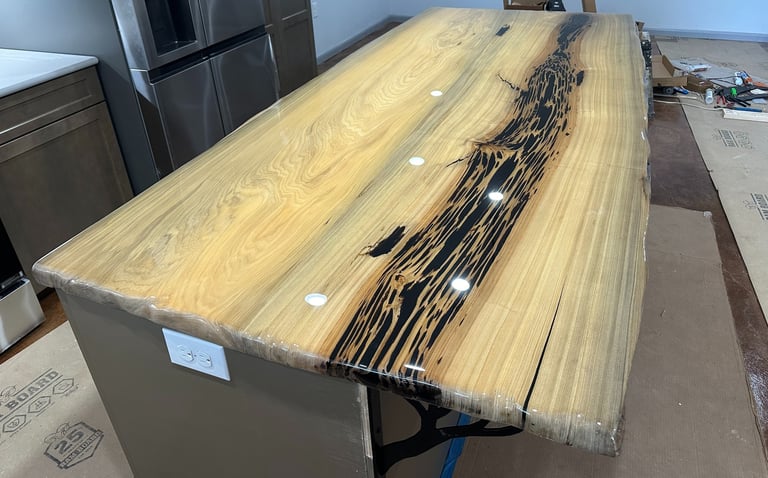
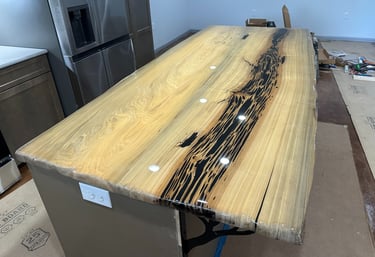
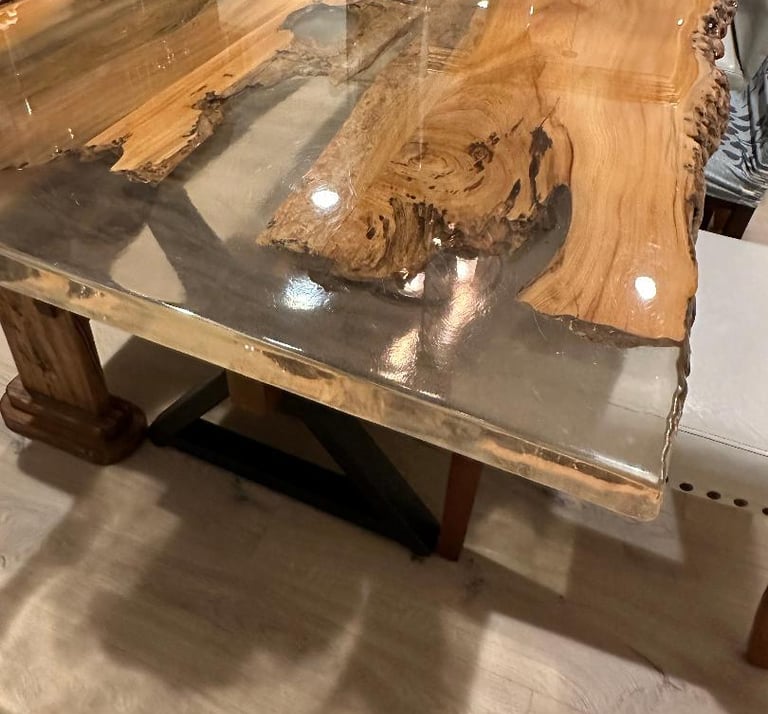
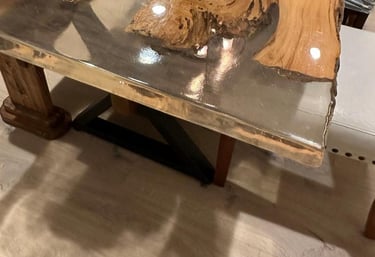
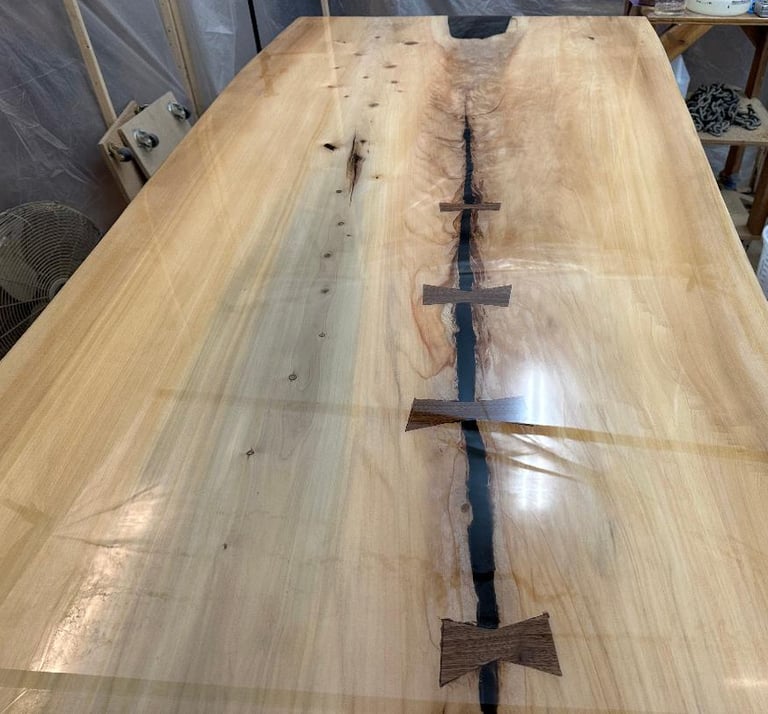
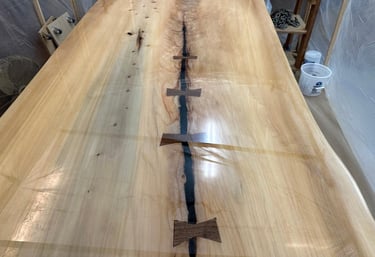
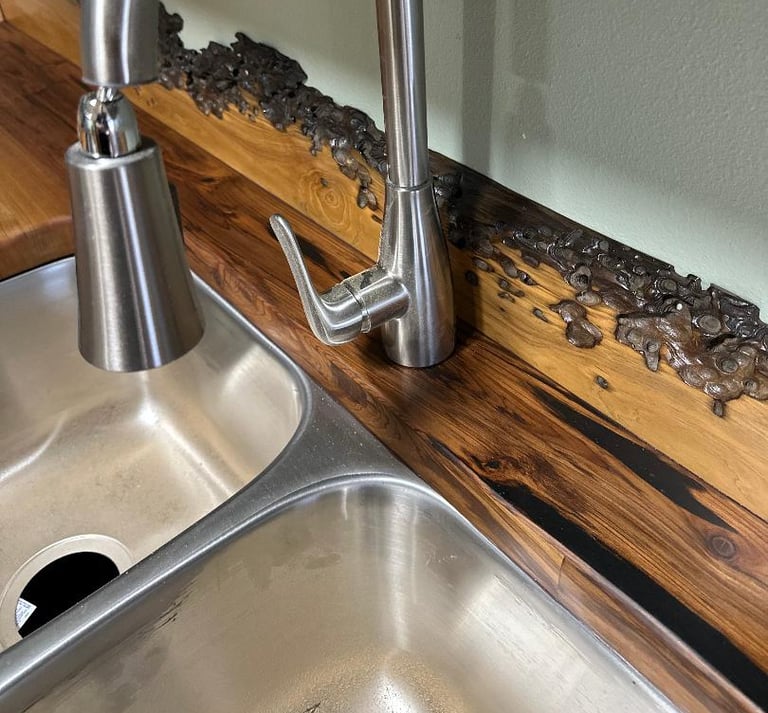
Seen here in this picture, the Pecky Cypress has been filled with black epoxy, and then the counter finished with tabletop epoxy for a kitchen island.
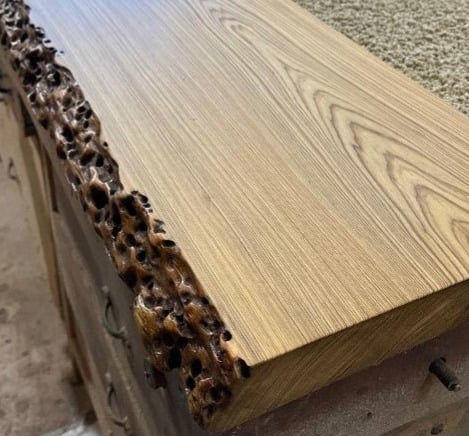
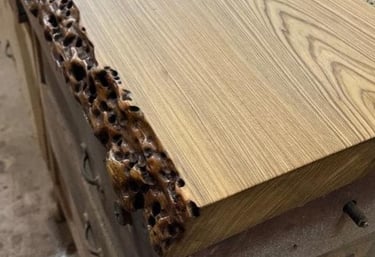
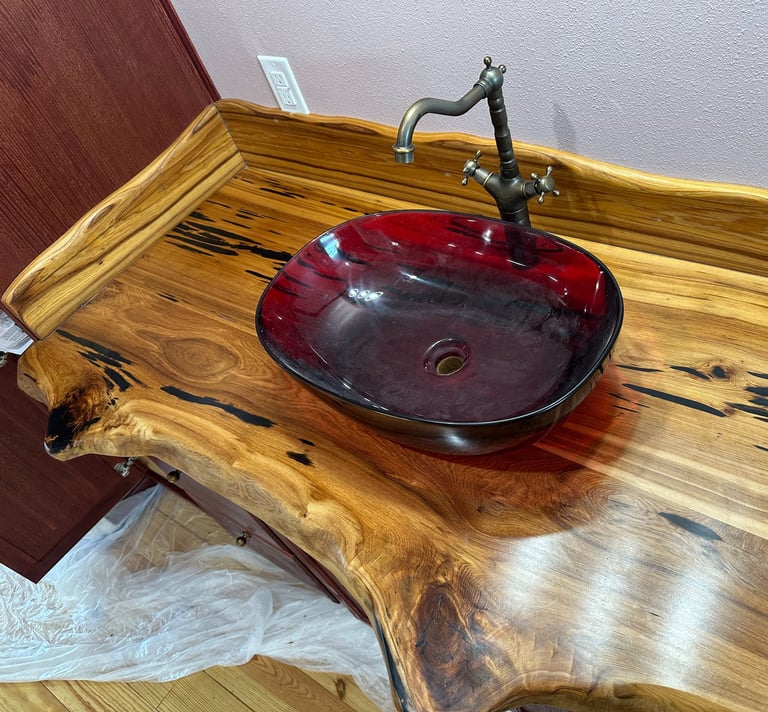
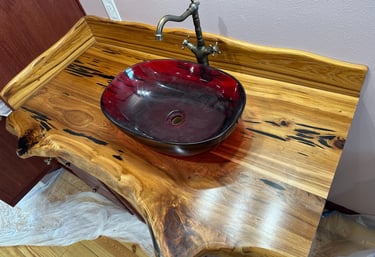
Preserved in the golden brown Louisiana waters, over decades, even a century or more, the old growth logs absorbed minerals and tannins from the muddy bottoms, imparting a breathtaking spectrum of rich, enduring colors. It's these colorful logs we seek today to produce truly gorgeous and breathtaking furniture.
One feature is the live edge of slabs used as the edges of tables, counters and shelves. These distinct edges speak to the time spent submerged, and the effects of slow flowing water and marine life. Most of all, these edges call out with character that attracts the eye and delights the soul.
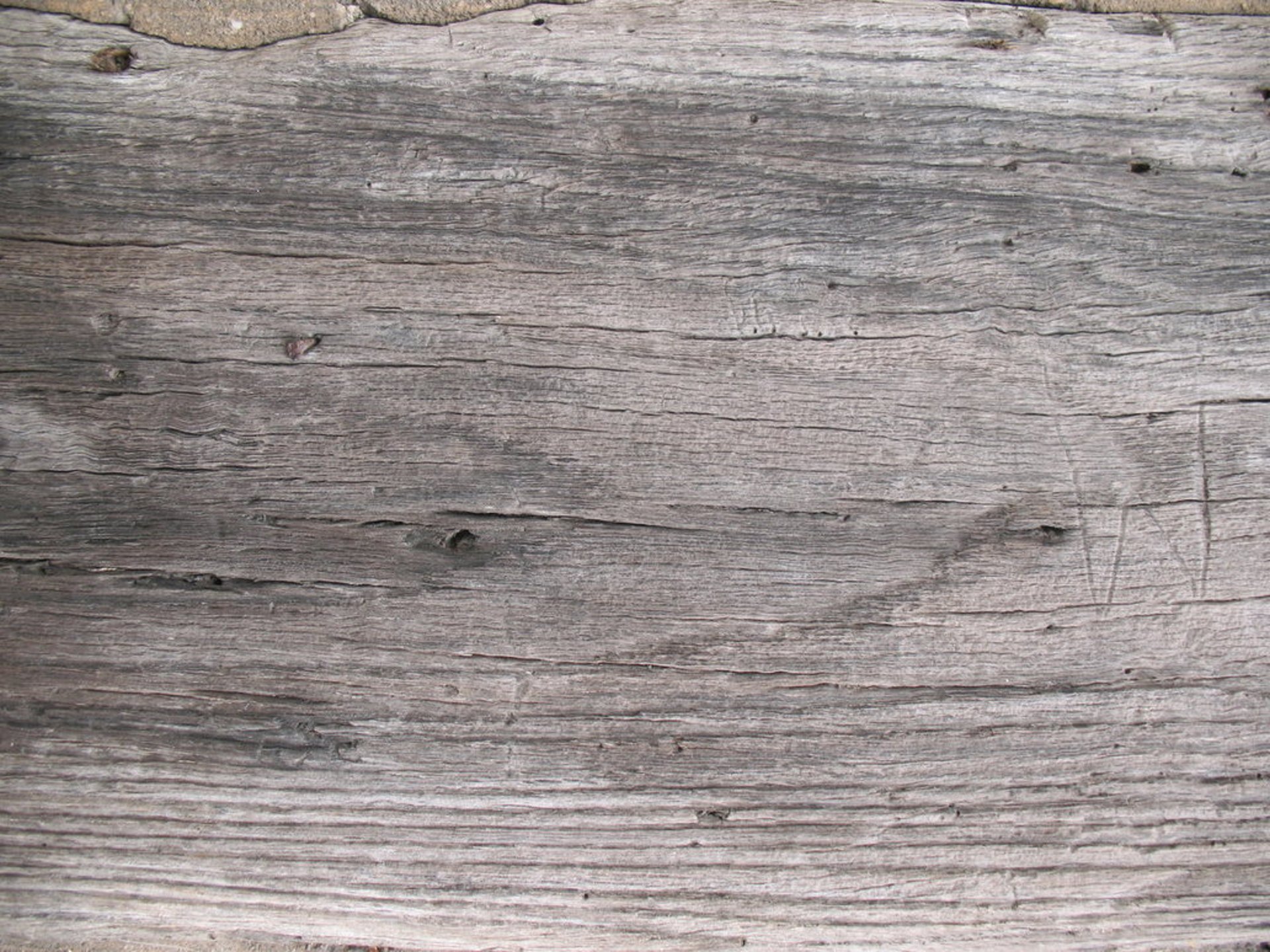
'Pecky' Cypress, so called because it resembles wood that has been "pecked" by birds or tools, is a sought after unique texture caused by a fungal infection in living bald cypress trees. The fungus dies once the tree is harvested, preserving the pattern.
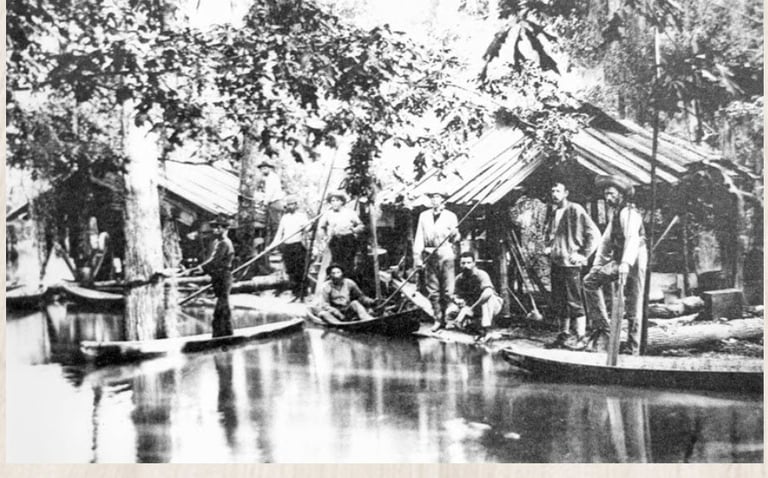
In the late 1800s, cypress loggers in Louisiana endured a brutal, isolated life deep in the swamps, working knee-deep in water, mud, and mosquitoes from dawn to dusk. They lived in rough floating camps, battled heat, disease, snakes, and alligators, and relied on hand tools and mule teams to fell and move massive cypress logs. Despite the danger and exhaustion, their labor fed a booming lumber industry, leaving behind a legacy of resilience and craftsmanship rooted in one of the harshest working environments in America.